Beyond the Screen: Unlocking Potential with Immersive Learning and Collaborative XR
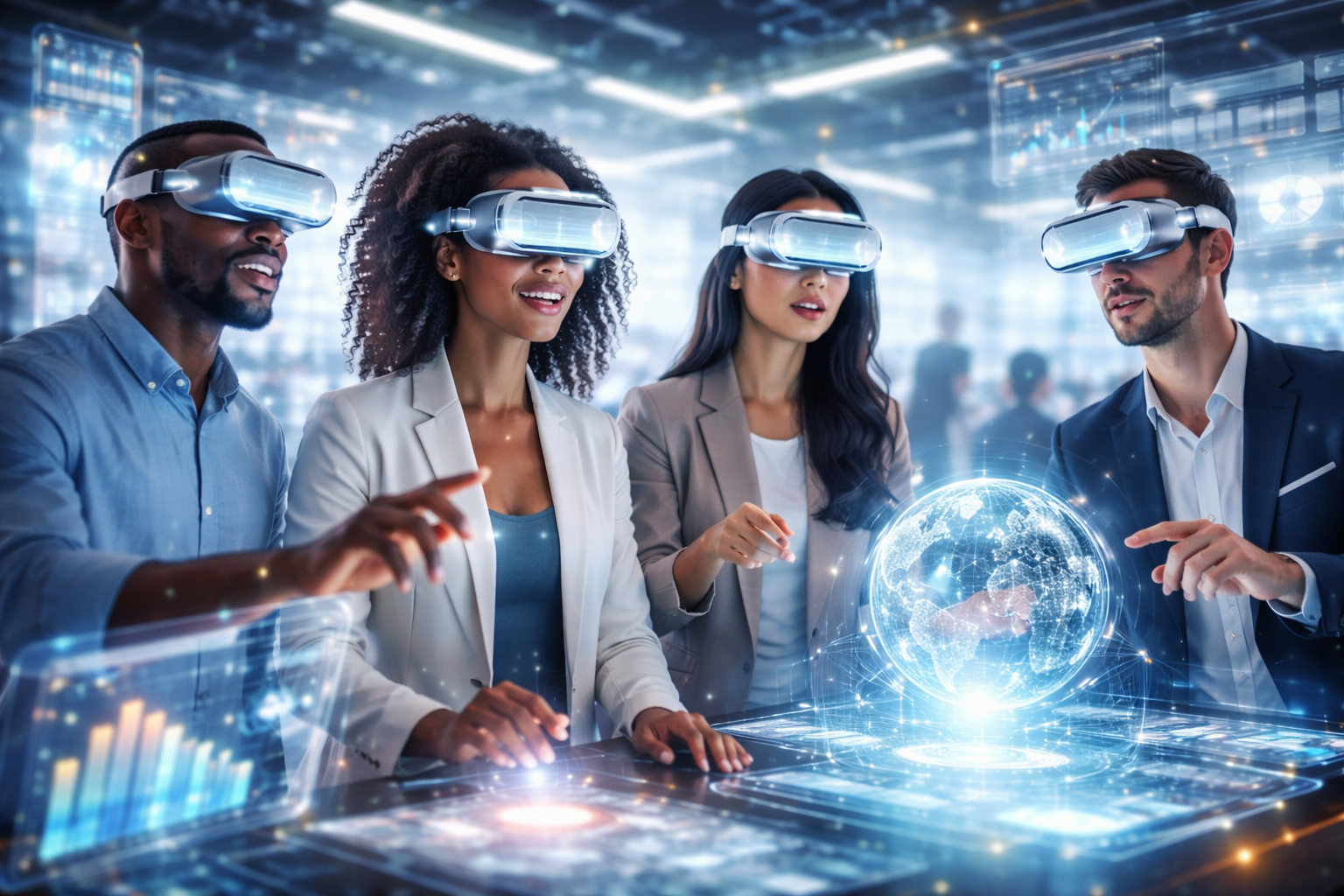
Welcome to the New Frontier of Learning and Work
Remember the days when learning meant sitting in a classroom, listening to a lecture, or perhaps clicking through an online course? And work often meant being physically present in an office, collaborating around a conference table. Well, prepare to have those notions wonderfully disrupted! We're standing on the cusp of a profound revolution in how we acquire skills and collaborate, powered by the incredible convergence of immersive learning and collaborative XR (eXtended Reality) workspaces.
This isn't science fiction anymore; it's the present and future of career development and organizational efficiency. Imagine stepping into a virtual operating room to practice a complex surgical procedure, or collaborating with a design team across continents, manipulating 3D models as if you were all in the same physical space. This is the promise of immersive learning and XR, offering unparalleled engagement and effectiveness that traditional methods simply can't match.
In this post, we're going to dive deep into how these groundbreaking technologies are not just enhancing, but fundamentally transforming the landscape of career growth, corporate training, and leadership. Get ready to explore a world where learning is an adventure, and collaboration knows no geographical boundaries, setting a new standard for professional development.
What Exactly is Immersive Learning?
At its core, immersive learning is about creating experiences that deeply engage learners, making them feel truly present and involved in the learning environment. Unlike passive learning, where information is simply consumed, immersive learning actively places the individual within a simulated context. This often leverages technologies like Virtual Reality (VR), Augmented Reality (AR), and Mixed Reality (MR) to build rich, interactive scenarios that mimic real-world situations, allowing for hands-on practice without real-world risks.
Think beyond just watching a video or reading a textbook. With immersive learning, you might be navigating a virtual factory floor to troubleshoot machinery, walking through a digital recreation of an historical event, or even practicing public speaking in front of a simulated audience. The key is the feeling of 'presence' – that sensation of genuinely being in another place, which dramatically boosts engagement, information retention, and the transfer of learned skills to actual performance.
The benefits are profound: learners can make mistakes and learn from them in a safe, controlled environment. They can repeat scenarios until mastery is achieved, receive immediate feedback, and experience concepts rather than just memorizing them. This experiential approach taps into our natural way of learning by doing, accelerating skill acquisition and building confidence in a way that traditional pedagogical methods often struggle to achieve.
Decoding Collaborative XR Workspaces
While immersive learning focuses on individual engagement, collaborative XR workspaces take this a step further by bringing people together within these extended reality environments. XR is an umbrella term encompassing Virtual Reality (VR), Augmented Reality (AR), and Mixed Reality (MR). VR fully immerses you in a digital world; AR overlays digital information onto your real environment; and MR blends the two, allowing digital objects to interact with the physical world.
A collaborative XR workspace is essentially a shared virtual or augmented space where individuals, often represented by avatars, can interact with each other and with digital content in real-time. Imagine a virtual meeting room where colleagues from different continents can gather, share 3D models, brainstorm on a massive virtual whiteboard, and even experience spatial audio that makes it feel like someone is speaking directly beside you.
These environments are breaking down geographical barriers, making remote collaboration far more intuitive and engaging than traditional video conferencing. Teams can conduct design reviews, perform virtual training simulations together, or even hold entire conferences where networking feels much more natural and personal. It's about moving beyond flat screens and into a shared, three-dimensional digital realm where presence and interaction are deeply felt, fostering stronger connections and more effective teamwork.
The Synergy: Where Immersive Learning Meets Collaborative XR
Now, here's where the magic truly happens: when immersive learning merges with collaborative XR workspaces. This powerful combination moves beyond individual training simulations to enable shared, interactive learning experiences that mirror real-world team dynamics. Instead of just learning a skill in isolation, you can now practice it alongside colleagues, mentors, or even AI-driven characters in a realistic, shared virtual environment.
Consider a team of engineers learning to operate a complex new piece of machinery. In a collaborative XR workspace, they could virtually gather around a 3D digital twin of the machine, each taking turns to perform tasks, troubleshoot issues, and receive real-time feedback from a virtual instructor or an expert colleague present in the same digital space. This not only teaches the technical skills but also hones teamwork, communication, and problem-solving abilities crucial for effective collaboration.
This synergy bridges the gap between theoretical knowledge and practical application, allowing learners to apply concepts immediately in a simulated, collaborative context. It fosters a richer, more engaging learning environment where peer-to-peer learning thrives, and the collective intelligence of a team can be harnessed to solve complex challenges. The result is a deeper understanding, faster skill acquisition, and a more robust preparation for real-world scenarios that demand both individual expertise and collaborative prowess.
Unlocking Career Potential: Skills Development in the XR Era
The integration of immersive learning and collaborative XR is fundamentally reshaping how we develop critical skills, opening up unprecedented opportunities for career growth. For 'hard skills,' XR provides a safe and effective sandbox. Surgeons can practice intricate procedures countless times without risk to patients, manufacturing technicians can assemble complex components virtually, and pilots can master emergency protocols in high-fidelity simulations. This leads to faster proficiency and a higher standard of competence across various technical fields.
But the impact extends far beyond technical capabilities. XR is proving to be a game-changer for developing crucial 'soft skills' too. Imagine participating in a VR simulation where you navigate a challenging customer service interaction, practice difficult conversations with virtual colleagues, or lead a team through a crisis scenario. These experiences build empathy, refine communication, enhance problem-solving, and cultivate leadership qualities in a highly realistic and emotionally engaging way, providing immediate feedback on your performance.
Furthermore, XR enables highly personalized learning paths. AI can track a learner's progress within an immersive environment, identifying areas of weakness and dynamically adapting the content or scenarios to focus on those specific needs. This adaptive learning, coupled with the accessibility of XR platforms, means individuals can pursue continuous professional development from anywhere, at any time, tailoring their learning journey precisely to their career aspirations and current skill gaps. It's about creating a workforce that is not just skilled, but adaptable, resilient, and continuously evolving.
Transforming Corporate Training and Onboarding
For organizations, the adoption of immersive learning and collaborative XR workspaces translates into significant advantages, particularly in corporate training and onboarding. One of the most immediate benefits is cost reduction. Traditional training often involves travel expenses, physical trainers, and dedicated facilities. XR can drastically cut these costs by allowing remote participation and virtual environments, making high-quality training accessible to a global workforce without logistical nightmares.
Beyond cost, the engagement factor is paramount. Employees often find traditional training modules tedious, leading to low retention rates. Immersive experiences, with their interactive and experiential nature, capture attention and maintain interest, leading to significantly higher engagement and, consequently, better knowledge retention. This means employees are not just going through the motions; they are actively participating and truly internalizing the material.
Moreover, XR facilitates faster proficiency. New hires can get up to speed much quicker by practicing their roles in realistic virtual simulations before ever touching real equipment or interacting with real customers. This accelerated learning curve not only makes onboarding more efficient but also reduces the risk of errors in real-world scenarios. It also ensures standardized training quality across all employees, regardless of location, ensuring everyone receives the same high-caliber instruction and develops a consistent set of skills.
Leadership in the Metaverse: Navigating and Leading in XR Environments
As our workspaces increasingly extend into the virtual realm, the nature of leadership itself is evolving. Leading in an XR environment, sometimes referred to as the 'metaverse,' requires a fresh set of skills and a nuanced understanding of virtual dynamics. Leaders must learn to establish a strong virtual presence, ensuring their communication is clear and impactful through avatars, and mastering the art of facilitating collaboration when team members are physically dispersed but virtually co-present.
Building and maintaining a strong team culture is another critical aspect. In collaborative XR spaces, leaders need to actively foster psychological safety, encourage virtual social interaction, and design engaging experiences that strengthen bonds and a sense of belonging, just as they would in a physical office. This involves being intentional about virtual team-building activities and leveraging the unique interactive capabilities of XR to create memorable shared experiences.
Furthermore, leaders must grapple with the ethical considerations inherent in these new digital frontiers. This includes safeguarding data privacy, ensuring digital well-being (preventing 'VR fatigue' or over-reliance on virtual interactions), and promoting inclusivity to bridge any potential digital divides. Strategic adoption is key; leaders need to identify where XR offers the most value, champion its integration, and guide their organizations through this transformative shift, ensuring a thoughtful and beneficial transition into the new era of work and learning.
Real-World Impact: Success Stories and Emerging Trends
The transformative power of immersive learning and collaborative XR isn't just theoretical; it's being demonstrated across a multitude of industries today. In healthcare, surgeons are using VR to train for complex operations, significantly improving patient outcomes. Manufacturing companies are leveraging AR overlays to guide technicians through intricate assembly processes, reducing errors and increasing efficiency. Retail giants are using VR for customer service training, simulating diverse scenarios to prepare employees for real-world interactions.
For instance, Walmart has deployed VR training to hundreds of thousands of employees for various scenarios, from customer service to store operations, reporting higher confidence levels and better retention. Companies like Boeing are using AR for aircraft assembly and maintenance, allowing technicians to overlay digital instructions onto physical components, drastically cutting down assembly time and improving accuracy. These examples highlight not just the 'cool' factor, but tangible ROI through improved performance, reduced costs, and enhanced employee satisfaction.
Looking ahead, emerging trends are set to make XR even more impactful. Haptic feedback devices are becoming more sophisticated, allowing users to 'feel' virtual objects, adding another layer of realism. AI-driven virtual tutors are becoming more intelligent and adaptive, providing personalized coaching within immersive environments. Hyper-personalization, where learning content and collaborative spaces are dynamically tailored to individual and team needs, promises an even more effective and engaging future for career development.
Overcoming Challenges and Embracing the Future
While the promise of immersive learning and collaborative XR is immense, there are certainly challenges to navigate. The initial cost of hardware, such as high-end VR headsets, can be a barrier for some individuals and smaller organizations. Technical expertise is also required for content creation and platform management, which may not be readily available. Concerns around motion sickness, user adoption, and the potential for a 'digital divide' if access isn't equitable, also need careful consideration.
However, many of these challenges are actively being addressed. Hardware costs are steadily decreasing, and devices are becoming more user-friendly and comfortable. The development of no-code/low-code XR content creation tools is democratizing access, allowing more creators to build immersive experiences without deep programming knowledge. Continued research into user experience design is minimizing issues like motion sickness, making these environments more accessible to a wider audience.
Embracing this future means acknowledging these hurdles but focusing on the immense potential. Organizations should consider phased implementations, starting with pilot programs to identify specific use cases and gather feedback. Investing in training for both content creators and end-users will be crucial. For individuals, staying curious and open to new ways of learning and collaborating will be key. The ongoing evolution of XR technology promises to overcome many of today's limitations, paving the way for an even more integrated and intuitive experience of work and learning.
A Glimpse into the Work and Learning of Tomorrow
We've embarked on an exciting journey, exploring how immersive learning and collaborative XR workspaces are not just futuristic concepts, but powerful, tangible tools reshaping our professional lives right now. From developing critical hard and soft skills in highly realistic simulations to fostering seamless, engaging collaboration across global teams, these technologies are setting a new benchmark for what's possible in career development and organizational efficiency.
The ability to learn by doing in risk-free, engaging environments, and to collaborate with colleagues as if you're physically together, transcends traditional limitations. It offers a path to accelerated skill mastery, reduced training costs, and a more connected, productive workforce. As leaders and individuals, understanding and strategically embracing these shifts will be paramount for staying competitive and thriving in the rapidly evolving landscape of work.
So, as you look towards your own career trajectory or the development of your team, consider the incredible potential of stepping into the immersive future. The tools are here, the benefits are clear, and the opportunity to redefine how we learn, work, and lead is truly boundless. The future of career growth isn't just about what you know, but how you experience and apply that knowledge in a world that's becoming increasingly virtual and wonderfully collaborative.
Comments (0)
No comments yet.