The Female Brain Under Pressure: How Cortisol and Chronic Stress Impact Women's Careers and Well-being
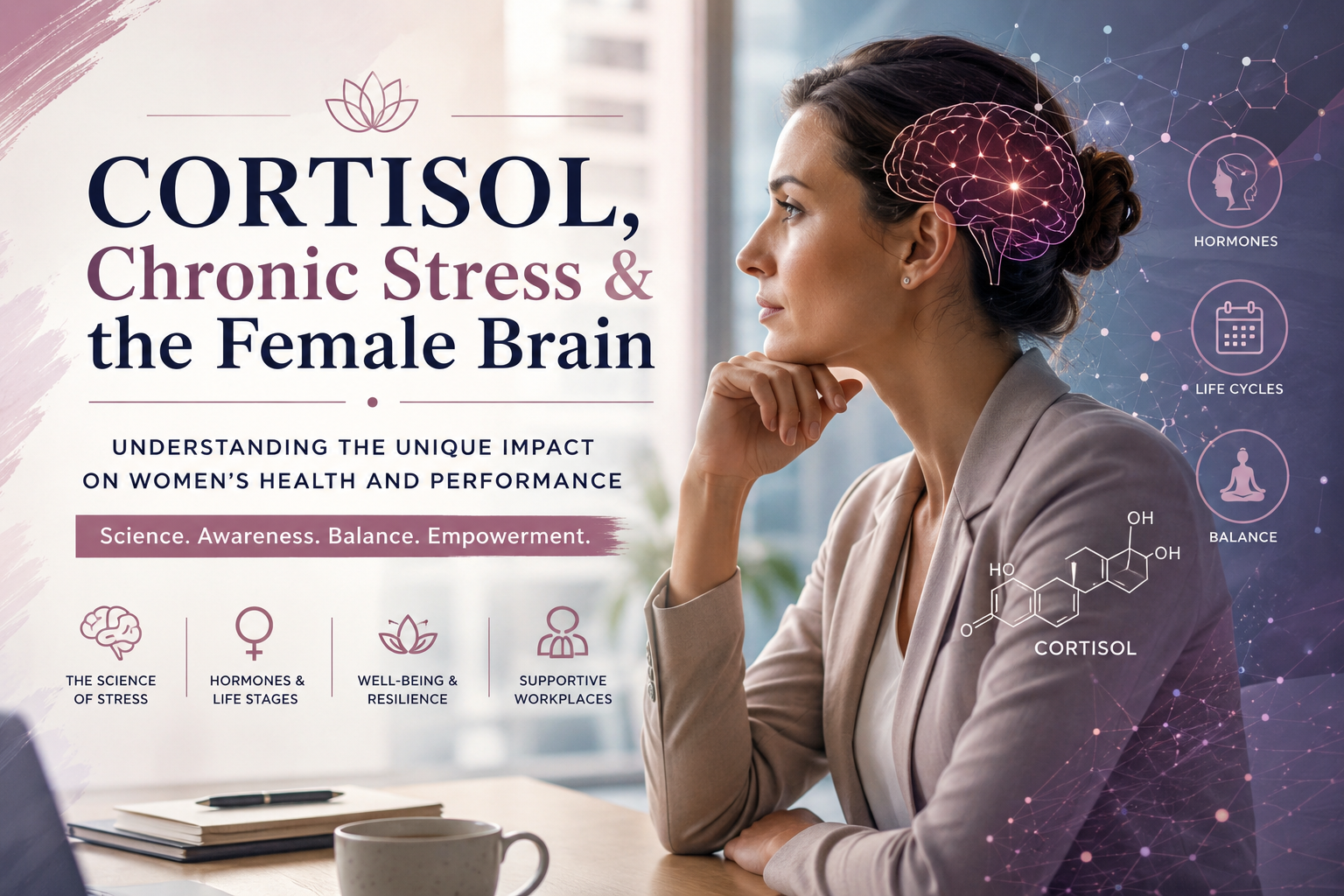
It's common to hear that to do well in today's tough work world, you need to be tough, flexible, and able to handle stress. But there's a whole complex system in your body that's always reacting to that stress. For women, this reaction isn't just about work. It's also shaped by hormones, brain chemistry, and what society expects.
Knowing how cortisol, which is your body's main stress hormone, messes with the female brain when stress lasts a long time isn't just some science talk. It directly affects how much you get done, how clear you can think, how you handle your feelings, and your health in the long run.
This article looks at new research. It shows how women deal with stress differently than men. And it explains why that matters in today's jobs. Things like the HPA axis and hormone changes through life shape how women react to stress. Lots of biological and mind-related things play a part. When professional women get this, they can make smarter choices about managing stress, setting limits at work, and just feeling good overall. Plus, companies can help their female staff more. They can make places where people can do well for a long time, not just burn out.
The Science Behind Stress and Cortisol
Stress is just how our body naturally reacts to protect us. For a short time, stress can help you focus better, make you more aware, and speed up your reactions. This reaction kicks in thanks to your sympathetic nervous system and something called the HPA axis. That's your body's main system for controlling stress.
When your brain senses trouble or danger, the hypothalamus tells the pituitary gland. Then, that gland tells your adrenal glands to let out cortisol. Cortisol does a lot in your body. It helps control blood sugar, how your body uses energy, blood pressure, and swelling. It also gets your body ready for tough stuff. This whole thing is good when stress is short-lived. It gives you the energy and focus to deal with hard times.
But things go wrong when stress never stops. Long-term stress keeps your HPA axis on all the time. It makes your body stay alert nonstop. Cortisol levels stay high. Over time, this messes up how your body usually works. Your sleep gets worse, your immune system gets weak, your mood goes up and down, and your energy levels are all over the place. Lots of people in demanding jobs feel this as constant tension, trouble relaxing, feeling drained, or like they're "on" all the time.
Our bodies just aren't built to be stressed out forever. When your stress response is on for too long, it can lead to something scientists call allostatic overload. That's when your body's ways of handling stress get worn out and don't work as well. Instead of helping you cope, those stress hormones start hurting you, both physically and emotionally.
For women, having high cortisol for a long time is a big deal. That's because hormone changes throughout their lives keep interacting with their stress system. This makes their stress experience more active and sometimes harder to predict than what guys usually go through.
Why Women Experience Stress Differently
More and more studies show that stress doesn't feel the same for men and women. Women often handle stress differently. This is because their hormones act differently, their brain structure varies, their brain chemicals work in unique ways, and they manage emotions distinctly. These aren't just habits; they're biological differences.
A woman's brain has special ways its hormone receptors work. These change how stress hormones affect mood, thinking, and how she processes feelings. Estrogen and progesterone, which are key female hormones, impact stress in many ways. They change how much your body reacts to cortisol, how brain chemicals work, and how your brain handles emotions.
Estrogen's effects are really complicated. Sometimes, it can actually help protect your brain from stress. It does this by boosting serotonin and helping you manage your feelings better. But other times, especially when hormone levels are jumping around, estrogen changes can make you more sensitive to emotions and stress. Progesterone also plays a part in your mood and how anxious you feel. It does this by working with calming brain chemicals.
Brain scans have shown differences in how men and women use parts of their brain when stressed. Women often show more action in areas linked to feeling emotions and dealing with people. Men, though, might show more action in parts of the brain that handle doing things. This could partly explain why women sometimes hold stress inside emotionally, while men might show it more through their actions.
The hippocampus, a part of your brain that helps with memory and emotions, seems to react differently to stress in women too. Having too much cortisol for a long time can mess with how you make memories and focus. This can lead to what people often call "brain fog." In demanding jobs, this can hurt how much you get done, how confident you feel, and how well you make choices.
These differences in biology don't mean women can't handle stress as well. What they show is how important it is to get how stress specifically impacts women's health and how they perform. That way, ways to cope can actually work better and make more sense.
The Menstrual Cycle and Workplace Stress
One of the biggest things that changes how sensitive women are to stress is their menstrual cycle. Hormone levels naturally go up and down all month. These shifts directly hit your mood, energy, how you think, and how your body handles cortisol.
During the follicular phase, right after your period, estrogen levels slowly climb. Lots of women say they focus better, feel more driven, are more emotionally steady, and have more energy then. Estrogen might also help control cortisol better, which makes you tougher against stress.
Around ovulation, some women still feel more confident and think more clearly. But after ovulation, the luteal phase starts, and progesterone levels go up. During this time, you might feel things more strongly, especially if your hormones are changing fast. Near the end of the luteal phase, when estrogen and progesterone drop, you might feel more anxious, easily annoyed, tired, and react emotionally more often.
For women who have really demanding jobs, these hormone changes can really mess with how they perform day-to-day. Things that seem easy one part of the month can feel much harder to deal with mentally during another. Your focus might jump around, your patience could wear thin, and keeping your emotions in check might take a lot more work.
Sadly, workplaces rarely consider these natural body rhythms. Many women push themselves to do the same amount of work, no matter how their bodies are doing inside. Over time, this gap between how your body actually is and what work expects can lead to constant stress and burnout.
Knowing your hormone patterns can help women handle their work and energy better. Keeping an eye on your mood, focus, sleep, and how you react to stress during your cycle can show you a lot about how you get things done. This knowledge helps you understand yourself, instead of just beating yourself up.
Pregnancy and the Stress Response
Getting pregnant brings some of the biggest hormone changes your body can go through. During this time, your HPA axis changes a lot because cortisol levels naturally go up. This helps the baby grow and supports other body changes.
Even though having more cortisol during pregnancy is normal, too much stress can still cause problems for both mom and baby. Long-term stress during pregnancy has been linked to a higher chance of anxiety, sleep issues, high blood pressure, and mood problems after birth. Scientists are also still looking at how stress before birth might affect a baby's development and their health later in life.
Being pregnant also brings its own kind of mental pressure. Women in careers might worry about their job future, what work expects, feeling totally wiped out, and juggling their job with being a mom. In really demanding workplaces, these pressures can make stress levels shoot up a lot.
Many women feel like they have to keep performing at a high level all through pregnancy, even with huge body and hormone changes. Feeling tired, sick, emotionally sensitive, and not sleeping well are all common. But workplaces might not always make enough room for these real-life things.
Having supportive places to work during pregnancy can really help. Things like flexible work hours, fair expectations, and mental health help can cut down on extra stress during this tough physical time of life.
Perimenopause, Menopause, and Stress Vulnerability
Perimenopause and menopause are another big change in how women handle stress. During these times, estrogen and progesterone levels jump around unpredictably, and then they eventually drop. These hormone changes can really mess with your mood, how you think, your sleep, and how you manage your feelings.
Lots of women feel more anxious, irritable, have trouble sleeping, and can't handle stress as well during perimenopause. Hot flashes and night sweats can also make sleep even worse. This makes it harder to control your emotions during the day.
Estrogen is super important for how your brain works, your heart health, and keeping your emotions steady. When estrogen levels drop, some women notice they feel more mentally tired, have trouble with memory, or can't focus as well. Demanding work situations might feel extra overwhelming then.
Millions of professional women go through menopause. But many workplaces still don't really get it. Some women don't want to talk about their symptoms. They're afraid they'll be seen as not as good or not as productive. This silence can make them feel more alone and stressed.
We really need more awareness about menopause in professional places. Flexible rules, managers who get it, and open talks about women's health can help take away needless pressure. This lets women keep doing well at work during this time of life.
Chronic Stress and Physical Health in Women
Stress that lasts a long time hits almost every big system in your body. For women, having too much cortisol for ages can cause all sorts of health problems. These go way past just feeling emotionally drained.
Your immune system is extra sensitive to long-term stress. Women usually have stronger immune reactions than men. But they're also more likely to get autoimmune diseases. When cortisol stays out of balance, it can cause more swelling and mess up your immune system over time.
Your heart health also takes a hit. Long-term stress can make your blood pressure go up, cause more swelling, and raise your risk of heart disease. Women can also get heart problems linked to stress, like Takotsubo cardiomyopathy. People sometimes call it "broken heart syndrome," and it often happens after really strong emotional stress.
Your metabolism often struggles with long-term stress too. High cortisol can make you want high-calorie foods more. It also encourages fat to build up around your belly and messes with how your body uses insulin. This means a higher chance of gaining weight, getting metabolic syndrome, and Type 2 diabetes.
Digestion is another common thing that gets affected. Problems like irritable bowel syndrome (IBS), feeling bloated, nauseous, and having tummy troubles are all really tied to stress. Women get these stress-related digestion issues more often than men.
Not sleeping well is also one of the worst things chronic stress does. High cortisol can mess with melatonin, which makes it hard for your body to truly relax. Then, bad sleep makes you even more sensitive to stress, and this creates a cycle that's tough to break.
The Cognitive Effects of Chronic Stress
Long-term stress doesn't just mess with your body. It also changes how your brain works. Having too much cortisol for a long time can hurt your prefrontal cortex. That's the part of your brain that helps you focus, plan, make decisions, and control impulses.
Lots of women dealing with constant stress say they have trouble focusing, forget things, feel mentally drained, and are less creative. These things can really hurt how they do at work and how confident they feel.
Stress also affects how you handle your feelings. The amygdala, which is the brain's fear center, gets more active when you're stressed for a long time. This can make you more anxious, emotionally sensitive, easily annoyed, and always on edge.
Women might also tend to ruminate more. That means thinking over and over about stressful things or mistakes they think they made. Rumination can make anxiety and emotional exhaustion worse. It also makes it harder to mentally bounce back from work pressure.
After a while, constant emotional strain can lead to burnout. Burnout means you're totally emotionally drained, don't feel motivated, feel disconnected from work, and like you haven't achieved much. Women who are juggling job demands with caring for others or home duties are extra likely to burn out. They're often handling so many different responsibilities all at once.
The “Tend and Befriend” Stress Response
Everyone knows about the "fight or flight" response. But scientists think women might also deal with stress by "tending and befriending." This reaction is tied to oxytocin, a hormone that helps with bonding, trust, and feeling connected to people.
Instead of getting aggressive or pulling away when stressed, many women naturally look for support from others. They protect their relationships and take care of people. At work, this might look like working together, giving emotional support, mentoring, or helping sort out arguments.
This way of reacting can make work relationships stronger and teamwork better. But it can also make you feel totally overwhelmed emotionally. This happens if women always put other people's needs before their own. Emotional labor, which is constantly dealing with other people's feelings and needs, can be exhausting. Even more so when you're also dealing with high job expectations.
Women might find it hard to set limits. They often feel like they need to keep things peaceful or support their coworkers. Over time, this can leave them emotionally empty and feeling resentful. Learning to care for others while also protecting yourself is key for your well-being in the long run.
Effective Stress Management Strategies for Women
Really handling stress well takes more than just quick relaxation tricks. To manage stress in a lasting way, you need to support your nervous system all the time. That means making good choices about how you live, understanding your feelings, and setting healthy limits.
Sleep is one of the most important things for bouncing back from stress. Getting good, steady sleep helps your hormones stay balanced, your emotions process, your brain recover, and your immune system work. Women with long-term stress should really focus on good sleep habits. They should build routines that help their nervous system recover.
Moving your body is another key tool. Doing moderate exercise like walking, yoga, cycling, or lifting weights can help control cortisol and boost your mood. But too much exercise can actually raise stress hormones more. This is especially true for women who already have hormone imbalances.
What you eat also really matters for controlling stress. Meals that are balanced, with protein, good fats, fiber, and important nutrients, help keep your blood sugar steady and support hormone making. Skipping meals or drinking tons of coffee can make cortisol levels jump around more and make you more anxious.
Practicing mindfulness, like meditation, breathing exercises, and journaling, can also help calm your nervous system. These habits help you get better at knowing your feelings. They also lower how often you automatically react to stress over time.
Just as important is learning to set boundaries. Lots of professional women feel like they always have to prove themselves. This makes them take on too much and feel emotionally drained. Saying no, giving tasks to others, and guarding your personal time are super important skills to stop burnout.
The Role of Workplaces in Supporting Women’s Well-Being
Companies really have a big job to do. They need to lower work stress and truly support their female staff. Just offering general wellness stuff often isn't enough. Workplaces need to see that women might have unique stresses. These can be about caring for family, reproductive health, hormone changes, and what society expects.
Flexible work options can cut down stress a lot. They let women have more say over their schedules. Being able to work from home, having fair workloads, and good leave policies can make both people feel better and get more done.
How leaders act matters too. Managers who talk clearly, push for healthy boundaries, and spot signs of burnout create places that feel safer mentally. People are more likely to ask for help when they feel respected, not judged.
Getting mental health help should also be easy. Counseling, stress management programs, and learning about women's health can help make talking about emotional well-being normal at work.
Supporting women's health isn't just a personal thing. It directly impacts how long employees stay, how involved they are, how much they get done, and the whole company vibe. Companies that put employee well-being first usually see better results in the long run and healthier workplaces.
Conclusion
The link between cortisol, ongoing stress, and the female brain is pretty tricky. But understanding it is a must in today's intense work world. Women deal with stress thanks to a mix of biological, hormonal, emotional, and social things. These shape how their body and mind react over time.
Hormone changes during the menstrual cycle, pregnancy, perimenopause, and menopause can all affect how sensitive you are to stress and how you handle emotions. Long-term stress doesn't just hit your mood and thinking. It also impacts your heart, immune system, metabolism, sleep quality, and your overall health for years to come.
Knowing these facts helps women deal with stress more thoughtfully and be kinder to themselves. It also shows why workplaces need to create more supportive spaces. These places should actually admit what female health is like, instead of just pretending it's not there.
Doing well at work shouldn't mean sacrificing your long-term physical or emotional health. When we mix what science tells us with real-world support, women can have better relationships with their jobs. They can protect their mental and physical health. And they can chase meaningful careers in a way that actually lasts.
Comments (0)
No comments yet.