The Human Skills Renaissance: How Empathy, Adaptability & Ethical AI Usage Redefine Our Future
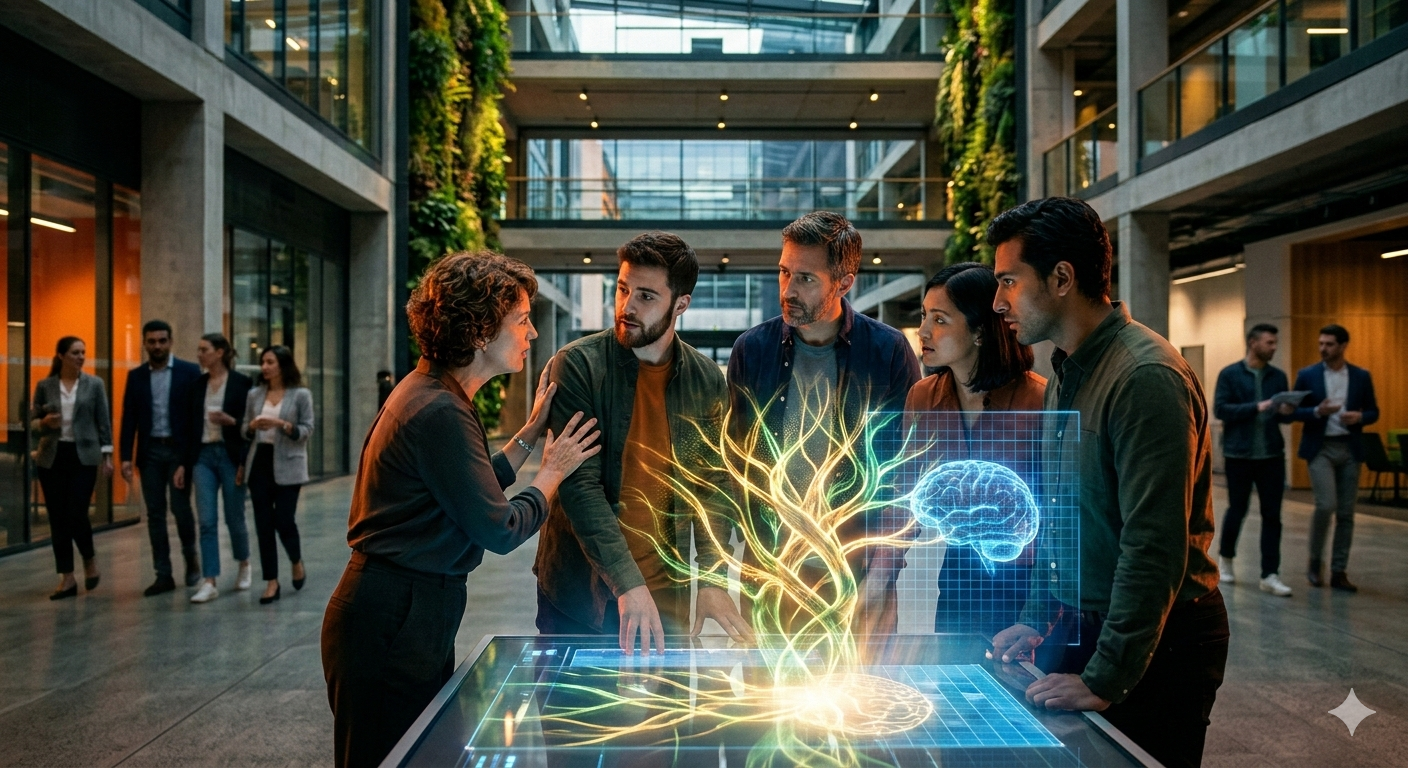
The Human Skills Renaissance: Navigating the Future with Empathy, Adaptability, and Ethical AI Usage
The Dawn of the Human Skills Renaissance
In an era defined by breathtaking technological acceleration, where artificial intelligence increasingly automates tasks and augments human capabilities, a profound shift is underway. We are witnessing not the marginalization of humanity, but rather a powerful re-emphasis on what makes us uniquely human. This is the 'Human Skills Renaissance' – a period where competencies like empathy, adaptability, and the ethical stewardship of technology are no longer mere desirable traits, but essential pillars for personal success, organizational resilience, and societal well-being.
The relentless march of innovation, particularly in AI, has brought us to a fascinating crossroads. While machines excel at processing data, executing algorithms, and learning patterns at scale, they inherently lack the nuanced understanding of human emotion, the capacity for genuine compassion, or the moral compass required to navigate complex societal dilemmas. It is precisely in these distinctively human domains that our true value is amplified, positioning these 'soft skills' as the new hard currency of the 21st century.
This blog post will explore these three critical human skills – empathy, adaptability, and ethical AI usage – not as isolated concepts, but as interconnected forces shaping a more humane, innovative, and sustainable future. We will delve into why they are indispensable today and how cultivating them empowers individuals and organizations to not just survive, but to truly thrive amidst unprecedented change. Prepare to discover how these fundamental human attributes are unlocking new potentials and redefining success.
Beyond Automation: Why Human Skills Matter More Than Ever
The narrative around AI often sparks anxieties about job displacement and a future dominated by machines. While AI undeniably streamlines processes and can perform many tasks with greater speed and accuracy than humans, its strengths also highlight our own irreplaceable value. AI is excellent at optimizing known solutions; humans excel at defining new problems, understanding unmet needs, and conceptualizing innovative solutions that transcend data points.
What AI cannot replicate are the intricate layers of human experience: the ability to truly connect with another person's feelings, to pivot gracefully in the face of unforeseen challenges, or to make judgment calls based on values rather than algorithms alone. These are the domains where human intelligence, emotional depth, and ethical reasoning reign supreme. As AI handles the 'what' and 'how' of many tasks, humans are increasingly responsible for the 'why' and the 'for whom'.
Therefore, the future of work is not a zero-sum game between humans and machines, but a synergistic partnership. AI serves as a powerful tool, an extension of human ingenuity, allowing us to focus on higher-order thinking, creativity, strategic foresight, and most importantly, meaningful human interaction. The more sophisticated AI becomes, the more vital our distinctively human skills become in guiding its application and interpreting its outputs for the betterment of society.
Empathy: The Compass in a Data-Driven World
In a world increasingly driven by data points and digital interactions, empathy stands out as an unparalleled human capability. Empathy is not merely sympathy or feeling sorry for someone; it is the profound ability to understand and share the feelings of another, to put oneself in their shoes, and to genuinely appreciate their perspective. This deep understanding forms the bedrock of meaningful relationships, effective communication, and truly impactful innovation.
Its importance reverberates across every facet of professional and personal life. In leadership, empathetic leaders inspire trust, foster psychological safety, and build cohesive teams capable of weathering any storm. In customer relations, empathy transforms transactions into lasting relationships, leading to greater loyalty and brand advocacy. For product developers and innovators, an empathetic approach ensures that solutions are genuinely user-centric, addressing real human needs and desires, rather than merely fulfilling technical specifications.
Moreover, empathy is a critical component of ethical decision-making. By understanding the potential impact of our actions on others – whether they be colleagues, customers, or broader communities – we are better equipped to make choices that are fair, inclusive, and compassionate. It provides the moral compass necessary to navigate complex ethical landscapes, ensuring that our advancements serve humanity rather than detract from it.
Cultivating Empathy: Practical Pathways to Deeper Understanding
While some may view empathy as an innate trait, it is, in fact, a skill that can be rigorously developed and honed. One of the most powerful pathways to cultivating empathy is through active listening. This involves giving someone your full, undivided attention, not just hearing their words but understanding the emotions and unspoken messages behind them. It requires suspending judgment and truly seeking to comprehend another's experience without immediately formulating a response.
Another crucial practice is perspective-taking. Actively challenging yourself to view situations from different viewpoints – be it a customer, a colleague from a different department, or someone from a contrasting cultural background – expands your understanding and reduces unconscious biases. Engaging with diverse communities, consuming varied forms of media, and seeking out stories from different walks of life can significantly broaden your empathetic horizons.
Finally, fostering self-awareness is foundational to empathy. Understanding your own emotions, triggers, and biases allows you to better recognize and regulate them, preventing projections onto others. Practices like mindfulness and journaling can enhance this self-knowledge. By consciously integrating these practices into our daily lives, we can transform empathy from an abstract concept into a powerful, actionable skill that enriches every interaction and decision.
Adaptability: Thriving in the Constant Whirlwind of Change
If empathy is our compass, adaptability is our sail, propelling us forward through the ever-changing currents of the modern world. The only constant, as the adage goes, is change – and its pace has never been more relentless. From technological disruptions to global shifts in markets and societal norms, the ability to pivot, learn, and reinvent oneself is no longer a luxury but a fundamental requirement for survival and success.
Adaptability encompasses several key attributes: resilience in the face of setbacks, a curious and open mindset towards new information, and the willingness to unlearn old ways of thinking or doing. It means embracing uncertainty not as a threat, but as fertile ground for new opportunities and growth. Individuals and organizations that are adaptable can quickly adjust their strategies, acquire new competencies, and reconfigure their operations to meet evolving demands.
Without adaptability, even the most innovative ideas or well-intentioned plans can quickly become obsolete. It enables us to move beyond rigid frameworks, experiment with novel approaches, and continuously refine our understanding of the world. In an environment where the future is increasingly unpredictable, adaptability ensures we remain agile, relevant, and capable of navigating whatever comes next.
Strategies for Enhanced Adaptability: Becoming a Lifelong Learner
Developing adaptability is an ongoing journey that requires deliberate practice and a commitment to lifelong learning. One of the most effective strategies is to cultivate a growth mindset – the belief that abilities and intelligence can be developed through dedication and hard work, rather than being fixed traits. This perspective transforms challenges into learning opportunities and failures into valuable feedback.
Actively seeking out new experiences, skills, and knowledge is paramount. This could involve taking online courses, learning a new programming language, engaging in cross-functional projects, or simply reading widely outside your immediate field. The goal is to continuously expand your mental models and equip yourself with a diverse toolkit of skills, making you more versatile and less dependent on a single set of competencies.
Furthermore, fostering a culture of psychological safety within teams and organizations is crucial. When people feel safe to experiment, make mistakes, and voice dissenting opinions without fear of reprisal, they are far more likely to embrace change and contribute innovative solutions. Regularly reflecting on past changes, identifying what worked and what didn't, and applying those lessons forward also solidifies the muscle of adaptability, transforming reactive responses into proactive, strategic evolution.
Ethical AI Usage: Guiding Technology with Conscience
As AI's capabilities expand, so too does our responsibility to guide its development and deployment with unwavering ethical rigor. Ethical AI usage is about ensuring that this powerful technology serves humanity's best interests, upholds fundamental values, and avoids unintended harms. It acknowledges that AI is not a neutral tool; its design, data, and application inherently reflect the biases and intentions of its creators, with far-reaching societal consequences.
The considerations are vast: preventing algorithmic bias that perpetuates discrimination, safeguarding privacy and data security, ensuring transparency in decision-making processes, and establishing clear accountability for AI's impacts. Without a strong ethical framework, AI could exacerbate social inequalities, undermine democratic processes, or lead to unforeseen dangers. The promise of AI can only be fully realized if it is built and deployed responsibly, with a deep understanding of its potential societal footprint.
This demands a proactive and human-centered approach. It means integrating ethical principles from the very inception of AI systems, not as an afterthought. It requires multidisciplinary collaboration, bringing together engineers, ethicists, policy makers, and social scientists to collectively define guardrails and envision futures where AI enhances human flourishing, rather than diminishing it. Ethical AI usage is not just about avoiding harm; it's about actively designing for good.
Building an Ethical Framework: Human Values at AI's Core
To ensure AI serves humanity responsibly, we must actively construct robust ethical frameworks. This process begins with clearly articulating core human values – such as fairness, autonomy, dignity, transparency, and accountability – and embedding them into the entire AI lifecycle. It means moving beyond mere compliance with regulations to fostering a culture of ethical responsibility among all stakeholders involved in AI development and deployment.
Practical steps include establishing ethical review boards for AI projects, implementing rigorous bias detection and mitigation strategies, and designing systems with built-in explainability (the ability to understand why an AI made a particular decision). Furthermore, it necessitates educating AI developers and users alike on ethical considerations, encouraging critical thinking, and fostering open dialogue about AI's societal implications. Diverse representation in AI design teams is also crucial to identify and address potential biases that might otherwise be overlooked.
Ultimately, building an ethical framework for AI is a continuous process of learning, adaptation, and collective moral reasoning. It requires courage to question the status quo, to challenge potentially harmful applications, and to prioritize human well-being over technological expediency. By placing human values at the core of AI's evolution, we can harness its immense power to create a future that is not just intelligent, but also just and humane.
The Synergy: How These Skills Intersect for a Better Future
While we've explored empathy, adaptability, and ethical AI usage individually, their true power emerges when they intersect and reinforce one another. Consider how empathy directly informs ethical AI design: by understanding the diverse needs, vulnerabilities, and potential impacts on various user groups, we can design AI systems that are inherently more fair, inclusive, and beneficial. Empathy allows us to anticipate unintended consequences and build safeguards against bias and discrimination, ensuring AI truly serves all of humanity.
Adaptability, in turn, is crucial for maintaining ethical AI practices. As AI technologies rapidly evolve and their societal impacts become clearer, ethical guidelines and regulations must also adapt. An adaptable mindset allows us to continuously re-evaluate our ethical frameworks, learn from new challenges, and pivot our approach to AI governance. It ensures that our commitment to responsible AI remains dynamic and responsive to the accelerating pace of technological change.
Together, these skills form a powerful synergistic triad. Empathy provides the 'why' – the human-centered purpose for AI. Adaptability provides the 'how' – the agility to navigate its evolving landscape. And ethical AI usage provides the 'what' – the conscious application of technology rooted in human values. This integration ensures that innovation is not just technically brilliant, but also socially responsible and deeply humane, leading to solutions that truly uplift and empower.
Conclusion: Stepping into Tomorrow with Purpose and Power
The 'Human Skills Renaissance' is not a retreat from technology, but a clarion call to embrace and elevate our most distinctive human attributes in an AI-powered world. Empathy, adaptability, and ethical AI usage are not mere 'soft skills' to be indulged; they are robust, strategic competencies that will define leadership, innovation, and societal progress in the decades to come. They are the bedrock upon which a resilient, equitable, and flourishing future will be built.
Investing in these skills means investing in ourselves and in the collective human project. It means recognizing that while AI can amplify our capabilities, it cannot replace our conscience, our capacity for connection, or our inherent drive to learn and grow. This renaissance invites each of us to become more discerning, more compassionate, and more agile in our thinking and doing.
Let us step into tomorrow not with trepidation, but with purpose and power, armed with the uniquely human abilities that will guide technology towards its highest potential. By cultivating empathy, embracing adaptability, and championing ethical AI usage, we don't just prepare for the future; we actively shape it, ensuring it remains profoundly human at its core.
Comments (0)
No comments yet.