The Indispensable Edge: Why Your Human Skills Are the New Premium in the Age of AI
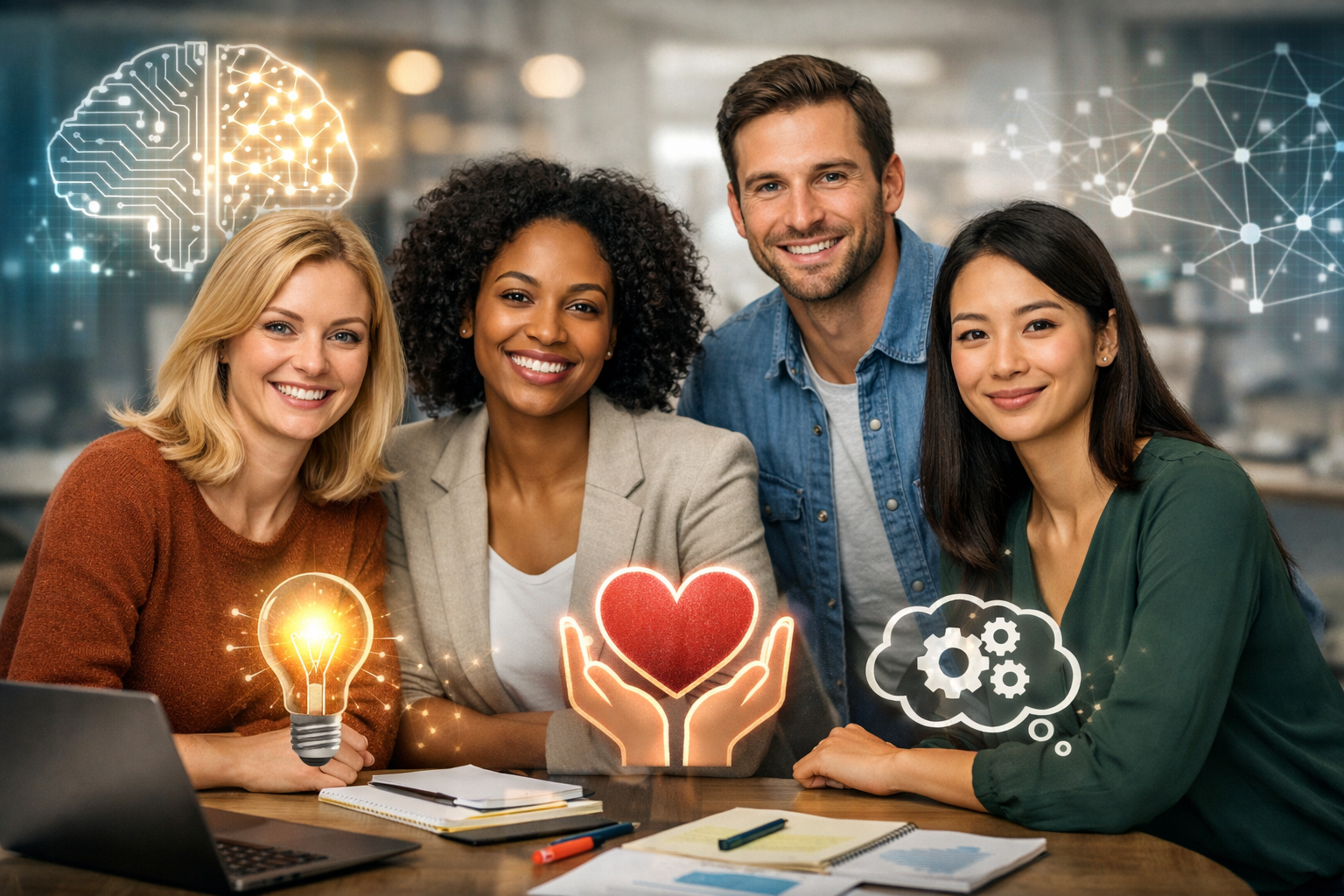
The Shifting Sands of Work: Why Human Skills Matter More Than Ever
In our rapidly evolving world, the rise of Artificial Intelligence (AI) has sparked countless conversations, many of them tinged with a mix of awe and apprehension. We see headlines about AI writing code, generating art, driving cars, and even performing complex medical diagnoses. It’s natural to wonder: what does this mean for human jobs? Will AI replace us entirely? While these questions are valid, they often miss a crucial, empowering point: AI isn't just a threat; it's also highlighting what makes us uniquely indispensable.
Far from diminishing human value, AI is actually elevating the importance of our innate, uniquely human capabilities. We’re entering an era where skills that were once considered "soft" or secondary are now becoming the most valuable assets in the professional landscape. This phenomenon is what we call the "Human Skills Premium" – the increasing demand and value placed on abilities that AI cannot replicate, automate, or even fully comprehend.
This blog post isn't about fearing the machines; it's about understanding how to thrive alongside them. It's an exploration of why our capacity for creativity, empathy, critical thinking, and complex collaboration isn't just surviving the AI revolution – it's leading it. Get ready to discover how cultivating these essential human attributes will not only secure your future but also empower you to shape it in profound and meaningful ways.
Defining the 'Human Skills Premium': Beyond Automation
So, what exactly constitutes this "Human Skills Premium"? It's more than just a buzzword; it's a fundamental shift in what the market values. While AI excels at processing vast amounts of data, executing repetitive tasks with flawless precision, and identifying patterns invisible to the human eye, it lacks the nuanced understanding, emotional depth, and contextual judgment that define human interaction and innovation. AI can optimize, but it often can't originate truly novel concepts or navigate complex human relationships with genuine insight.
These premium human skills aren't confined to a single domain; they span across cognitive, emotional, and social intelligence. Think about the ability to innovate beyond existing paradigms, to lead a diverse team through uncertainty, to negotiate a delicate agreement, or to comfort a distressed client. These are tasks that require a deep well of human experience, ethical reasoning, and intuitive understanding – qualities that remain firmly in our court.
The premium isn't just about what AI can't do; it's about what humans can do to elevate and guide AI. It's about combining our unique strengths with AI's capabilities to achieve outcomes far greater than either could alone. This synergy is where true value is created, making these distinct human attributes not merely desirable, but absolutely essential for any organization aiming to succeed in an AI-dominated world.
Creativity and Innovation: The Spark AI Can't Ignite
When we talk about creativity, we're not just referring to artistic endeavors, though those are certainly part of it. In a business context, creativity means the ability to conceive new ideas, design novel solutions, and envision possibilities that don't yet exist. While AI can generate permutations of existing data or even create content that mimics human styles, it often struggles with true conceptual breakthroughs, serendipitous insights, or understanding the emotional resonance of a completely new concept.
Human creativity is fueled by our experiences, our biases, our cultural context, and our uniquely individual way of connecting disparate ideas. It's the spark that leads to groundbreaking inventions, disruptive business models, and compelling narratives that captivate and move people. AI can be an incredible tool for assisting creative processes – analyzing market trends, suggesting combinations, or generating drafts – but the initial, often messy, leap of imaginative faith typically belongs to us.
Organizations increasingly recognize that true innovation, the kind that drives competitive advantage and societal progress, stems from human ingenuity. Investing in fostering environments where employees feel safe to experiment, to fail, and to think "outside the box" is paramount. This human ability to dream up the impossible and then figure out how to make it possible is a premium skill that will only grow in demand.
Critical Thinking and Complex Problem Solving: Navigating the Unknown
AI excels at solving problems within defined parameters, especially those involving large datasets and clear rules. However, the real world is often ambiguous, messy, and full of unforeseen variables. This is precisely where human critical thinking and complex problem-solving abilities shine. We're talking about the capacity to analyze information from diverse sources, identify underlying assumptions, evaluate evidence, and make reasoned judgments, especially when data is incomplete or conflicting.
Beyond simply processing information, humans possess the ability to frame problems, to ask the right questions that AI might not even consider, and to understand the broader implications of a solution. When faced with a novel crisis, an ethical dilemma, or a strategic challenge with no historical precedent, it's our critical thinking that allows us to synthesize information, weigh trade-offs, and devise adaptable solutions that consider human impact and long-term consequences.
This skill isn't just about finding answers; it's about navigating uncertainty and embracing intellectual curiosity. It involves the humility to admit when we don't know, the courage to challenge the status quo, and the resilience to iterate through multiple approaches until a viable path forward emerges. In an age of information overload, the ability to discern truth from noise and to solve truly complex, ill-defined problems is an invaluable human premium.
Emotional Intelligence and Empathy: The Heart of Human Connection
Perhaps one of the most distinctly human attributes, emotional intelligence (EQ) refers to our capacity to understand, use, and manage our own emotions in positive ways to relieve stress, communicate effectively, empathize with others, and overcome challenges. While AI can analyze facial expressions or vocal tones to infer emotions, it cannot genuinely feel or respond with the deep, nuanced understanding that comes from shared human experience.
Empathy, a cornerstone of EQ, allows us to put ourselves in another person's shoes, to understand their perspectives, and to respond with compassion and genuine care. This is critical in so many aspects of work, from effective leadership and team collaboration to exceptional customer service and client relations. Building trust, resolving conflicts, inspiring motivation, and fostering a positive workplace culture all hinge on high levels of emotional intelligence.
In an increasingly automated world, the human touch becomes even more precious. Customers want to feel understood, employees need leaders who can inspire and support them, and teams thrive when members can connect on a deeper level. The ability to sense unspoken needs, to provide comfort, or to deliver constructive feedback with sensitivity are skills that create profound human connections – connections that AI, for all its sophistication, cannot forge.
Collaboration and Communication: Building Bridges in a Hybrid World
The modern workforce, whether in-person, remote, or hybrid, thrives on effective collaboration and communication. These aren't just about exchanging information; they're about building consensus, negotiating differences, inspiring action, and creating a shared vision. While AI tools can facilitate communication (e.g., translation, summary generation), the art of persuasive speaking, active listening, nuanced negotiation, and compelling storytelling remains a uniquely human forte.
Collaboration requires not just sharing tasks but also sharing ideas, challenging assumptions constructively, and building upon each other's strengths. It involves understanding diverse perspectives, navigating group dynamics, and fostering an environment where everyone feels heard and valued. These interpersonal dynamics, often complex and subtle, rely heavily on our social intelligence and our ability to adapt our communication style to different audiences and situations.
Think about a high-stakes presentation, a critical sales pitch, or a team brainstorming session aimed at solving a wicked problem. The energy, the connection, the ability to read the room, and to articulate a vision that resonates emotionally – these are human superpowers. As AI handles more routine information exchange, the premium shifts to mastering the art of human connection through compelling and strategic communication.
Adaptability and Resilience: Thriving in Constant Change
The only constant in the age of AI is change itself. New technologies emerge at an astonishing pace, disrupting industries and reshaping job roles. In this dynamic environment, the ability to adapt, to continuously learn new skills, and to embrace uncertainty is not just beneficial – it's absolutely essential. This human capacity for lifelong learning, for unlearning old habits, and for pivoting quickly in response to new information is a cornerstone of the Human Skills Premium.
Beyond simply adapting to new tools, resilience refers to our psychological capacity to bounce back from setbacks, to persevere through challenges, and to maintain a positive outlook in the face of adversity. The journey of innovation is often fraught with failures, and the ability to learn from those failures and keep moving forward is a profoundly human trait. AI doesn't experience discouragement or the motivation to try again after a "failed" algorithm; humans do.
Cultivating a growth mindset – the belief that our abilities can be developed through dedication and hard work – is key to both adaptability and resilience. It allows us to view new technologies not as threats, but as opportunities for growth and collaboration. In a world where job descriptions are fluid and industries are constantly being redefined, our capacity for continuous evolution is perhaps the ultimate premium skill.
Ethical Reasoning and Judgment: Guiding the AI Revolution
As AI systems become more autonomous and integrated into our daily lives, the importance of human ethical reasoning and judgment skyrockets. AI can process data and execute commands, but it lacks an inherent moral compass or the capacity for nuanced ethical deliberation. Who programs the values into AI? Who decides what constitutes fairness, privacy, or accountability when algorithms make decisions with real-world consequences? The answer is us.
This premium skill involves wrestling with complex moral dilemmas, understanding societal impact, and ensuring that technology serves humanity's best interests. It requires foresight to anticipate unintended consequences, courage to question powerful systems, and a deep commitment to human values. From designing AI that avoids bias to establishing policies for its responsible use, human ethical oversight is non-negotiable.
Whether you're a technologist, a leader, or an engaged citizen, developing your capacity for ethical reasoning is vital. It’s about more than just following rules; it's about shaping the rules, advocating for justice, and ensuring that the incredible power of AI is wielded responsibly. This human premium skill positions us not just as users of technology, but as its conscious architects and moral guardians.
Cultivating Your Human Skills Premium: A Lifelong Journey
The good news is that these "premium" human skills aren't exclusive to a select few; they are inherent capacities that can be developed and honed by everyone. It's a lifelong journey of self-awareness, intentional practice, and continuous learning. Start by reflecting on which of these skills resonate most with you and where you see opportunities for growth in your daily interactions and work.
Here are some practical ways to cultivate these vital human skills:
- Seek Diverse Experiences: Step outside your comfort zone. Engage with people from different backgrounds, work on interdisciplinary projects, and travel if possible. Exposure to new perspectives fuels creativity and empathy.
- Practice Active Listening: Truly hear what others are saying, both verbally and non-verbally. Ask open-ended questions and defer judgment. This enhances communication and emotional intelligence.
- Embrace Problem-Solving Challenges: Don't shy away from complex issues. Break them down, research different angles, and collaborate with others to brainstorm solutions. This builds critical thinking.
- Cultivate a Growth Mindset: View challenges as opportunities to learn, not as insurmountable obstacles. Be open to feedback and commit to continuous personal and professional development.
- Engage in Creative Pursuits: Whether it's writing, painting, playing music, or even just brainstorming new ways to do routine tasks, regularly exercise your creative muscles.
- Reflect on Ethics: When making decisions, big or small, consider the broader impact on people and society. Discuss ethical dilemmas with peers and mentors.
Remember, your journey to enhancing your human skills is about embracing your unique humanity. It’s about leveraging what makes you irreplaceable in a world increasingly augmented by machines. Investing in these skills is investing in your future, your career, and your overall well-being.
The Future is Human-AI Synergy, Not Substitution
As we look to the horizon, the picture that emerges is not one of human obsolescence, but rather of a powerful, symbiotic relationship between human intelligence and artificial intelligence. AI will continue to handle the data-heavy, repetitive, and optimizing tasks, freeing us to focus on the higher-order functions that truly differentiate us.
The "Human Skills Premium" isn't just a trend; it's the fundamental shift that will define success in the coming decades. It's about recognizing that our unique human capacities for innovation, empathy, critical judgment, and collaboration are not just valuable – they are the very engines of progress, purpose, and profound human achievement.
So, let's not fear the future of work. Let's embrace it with confidence, knowing that our uniquely human attributes are our greatest strength. Invest in yourself, cultivate these premium skills, and prepare to lead the way in a world where human ingenuity, guided by ethical purpose, works hand-in-hand with technology to create a brighter, more human-centric future for all.
Comments (0)
No comments yet.