The Symbiotic Revolution: Mastering 'Super-Skills' Through Human-AI Partnership
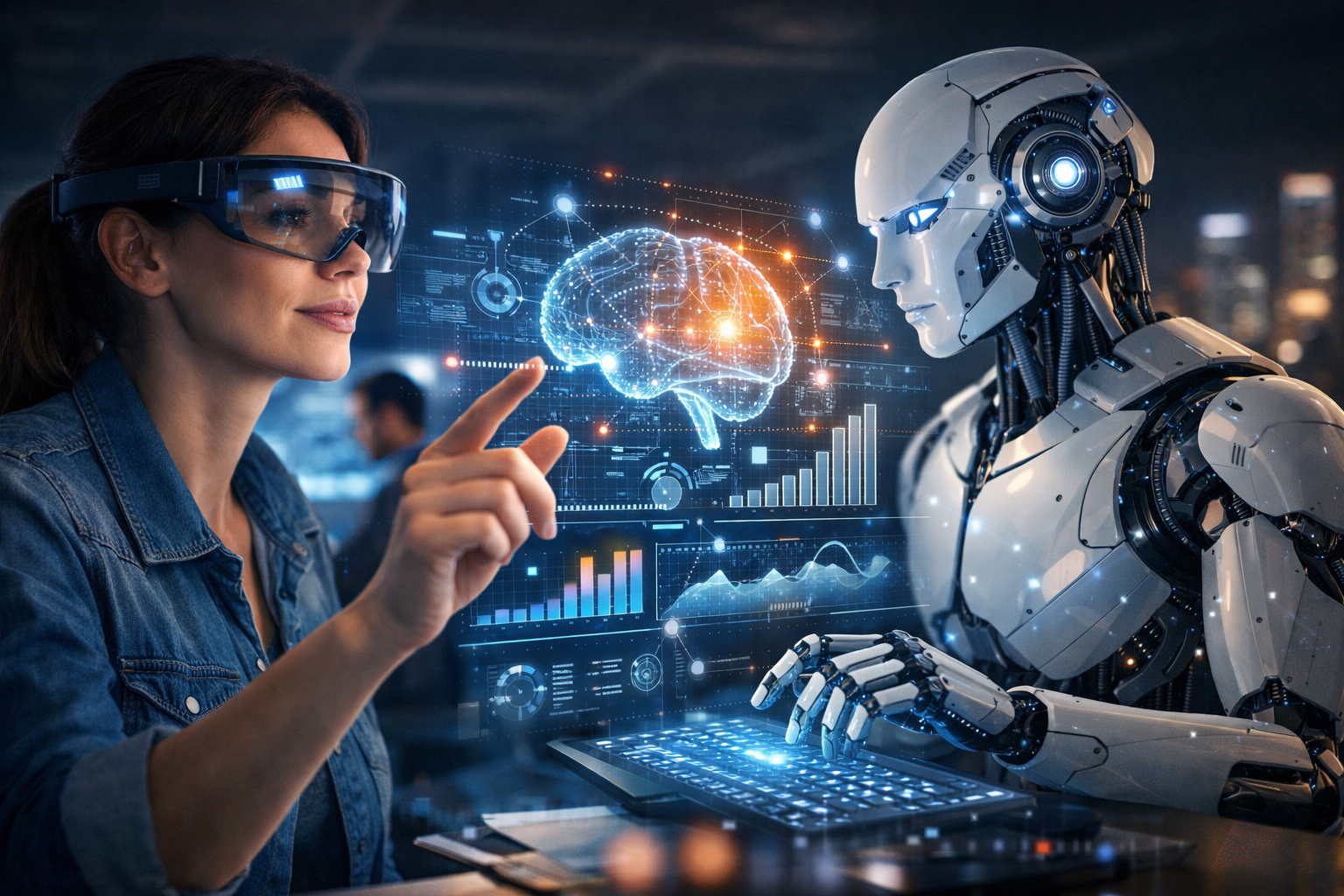
The Symbiotic Revolution: Mastering 'Super-Skills' Through Human-AI Partnership
The landscape of work, innovation, and human capability is undergoing an unprecedented transformation, driven by the rapid evolution of Artificial Intelligence. For decades, the narrative around AI often oscillated between utopian visions of boundless progress and dystopian fears of job displacement. However, as AI matures, a more nuanced and profoundly empowering reality is emerging: the era of Human-AI Collaboration. This is not merely about using AI tools; it's about forging a symbiotic relationship that gives rise to what we can best describe as 'Super-Skills' – augmented human capabilities that transcend traditional limitations.
In this new paradigm, AI is no longer just a computational engine or an automation tool; it is a strategic partner, an intellectual co-pilot that extends our cognitive reach and operational efficiency. Instead of seeing AI as a replacement for human intellect, we are beginning to harness its immense power to amplify our own, enabling us to achieve feats previously unimaginable. This shift marks a pivotal moment in human history, challenging us to rethink what it means to be skilled, productive, and innovative in the 21st century.
This post delves into the core tenets of Human-AI Collaboration, exploring how this powerful partnership is cultivating a new generation of 'Super-Skills.' We will examine the practical applications, the profound benefits, and the critical considerations necessary to responsibly navigate this exciting frontier. Our aim is to illuminate how individuals and organizations can embrace this collaborative future to unlock unparalleled potential, fostering an environment of empowerment and continuous growth.
Defining Human-AI Collaboration: Beyond Simple Automation
True Human-AI Collaboration signifies a dynamic, iterative partnership where humans and AI systems work together, leveraging their complementary strengths to achieve common goals. It moves far beyond the basic automation of tasks, where AI simply executes predefined instructions. Instead, it involves a continuous feedback loop where human insight guides AI, and AI-generated intelligence informs human decision-making, creating a synergistic effect that surpasses the capabilities of either entity working in isolation.
Unlike earlier waves of technological integration that focused on replacing manual labor, this collaboration emphasizes augmentation. AI takes on the heavy lifting of data processing, pattern recognition, and rapid iteration, while humans provide the crucial elements of creativity, critical thinking, emotional intelligence, ethical judgment, and strategic foresight. This division of labor isn't about one subservient to the other; it's about each partner focusing on what they do best, maximizing overall effectiveness and fostering a richer, more intelligent workflow.
The essence of this collaboration lies in understanding and respecting the unique aptitudes of both human and artificial intelligence. Humans excel at conceptualizing, empathizing, abstract reasoning, and navigating ambiguity. AI, conversely, thrives on speed, scale, precision, and the ability to process vast datasets. When these distinct strengths are interwoven, the result is an enhanced problem-solving capacity, leading to innovative solutions and outcomes that were previously out of reach for either humans or machines alone.
The Genesis of 'Super-Skills': Augmenting Human Potential
'Super-Skills' are not entirely new human abilities, but rather existing human competencies that are dramatically expanded and elevated through the strategic integration of AI. Think of them as cognitive and operational superpowers, enabling individuals to perform tasks with unprecedented speed, accuracy, and depth of insight. This augmentation fundamentally redefines what proficiency means in various professional domains, allowing individuals to operate at a significantly higher level of performance.
Consider the marketer who, aided by AI, can analyze vast swathes of consumer data, predict behavioral trends with uncanny accuracy, and personalize campaigns at a scale and precision impossible for a human alone. Or the designer who uses generative AI to rapidly prototype hundreds of variations, then applies human aesthetic judgment to refine and perfect the ultimate vision. These individuals aren't just doing their jobs; they are performing at a 'super' level, combining their innate human creativity and strategic thinking with AI's analytical prowess and execution speed.
The emergence of these super-skills represents a qualitative leap in human capability. It moves beyond simply doing more work faster; it enables us to tackle more complex problems, explore more intricate ideas, and deliver higher-value outcomes. By offloading routine cognitive burdens to AI, humans are freed to engage in deeper strategic thinking, cultivate greater empathy, and unleash more profound creativity, becoming architects of possibility rather than mere executors of tasks.
Enhancing Creativity and Innovation: The AI Muse
One of the most exciting, yet often misunderstood, aspects of Human-AI Collaboration is its potential to profoundly enhance human creativity and innovation. Contrary to fears that AI might stifle originality, it often acts as an incredibly powerful muse, generating novel ideas, exploring diverse permutations, and accelerating the creative process in ways previously unimaginable. AI can be a boundless source of inspiration, offering new perspectives and opening avenues for exploration.
How does this work in practice? AI can analyze vast datasets of existing creative works, identify underlying patterns, and then generate countless new concepts or variations. For writers, AI can offer plot suggestions, character ideas, or even draft initial paragraphs. For artists, it can create visual styles, suggest color palettes, or render conceptual designs. For engineers, AI can rapidly simulate thousands of design iterations, identifying optimal solutions or entirely new approaches to complex problems. This ability to rapidly explore a wide solution space significantly accelerates the ideation phase.
Crucially, the human role in this creative partnership remains indispensable. AI provides the raw material, the diverse palette of ideas, or the structural framework. It is the human artist, writer, or engineer who brings emotional intelligence, contextual understanding, ethical judgment, and the ultimate vision to refine, select, and elevate these AI-generated elements into something truly meaningful and impactful. The collaboration allows for a higher volume of creative output combined with superior human discernment, leading to truly groundbreaking innovations.
Boosting Productivity and Efficiency: The AI Co-Pilot
The most immediate and tangible benefit of Human-AI Collaboration often manifests in dramatic improvements in productivity and efficiency. By intelligently automating repetitive, data-intensive, or time-consuming tasks, AI frees human capital to focus on higher-value activities that demand unique human attributes such as critical thinking, creativity, and interpersonal skills. This partnership transforms workflows, making them leaner, faster, and more effective.
Consider the myriad ways AI acts as a tireless co-pilot: in finance, it can automate reconciliation and fraud detection; in legal, it can sift through vast quantities of documents for relevant information; in customer service, it can triage inquiries and provide instant responses to common questions. Specific examples include:
- Automated Data Processing: AI can extract, clean, and categorize data from various sources at speeds impossible for humans, ensuring accuracy and consistency.
- Streamlined Workflow Management: Intelligent automation can manage project schedules, assign tasks, and monitor progress, proactively identifying potential bottlenecks.
- Enhanced Communication: AI-powered tools can draft initial emails, summarize lengthy documents, or provide real-time translation, breaking down communication barriers and saving time.
- Predictive Maintenance: In industrial settings, AI monitors equipment to predict failures, allowing for proactive maintenance and minimizing downtime.
The outcome is not merely a quantitative increase in output, but a qualitative improvement in how work is done. Humans are liberated from the mundane, allowing them to dedicate their energy to strategic planning, complex problem-solving, building meaningful relationships, and tasks that truly require a human touch. This shift redefines the very essence of professional productivity.
Augmenting Decision-Making: Clarity in Complexity
In an increasingly data-rich and complex world, effective decision-making has become paramount. Human-AI Collaboration offers a powerful solution by augmenting human judgment with AI's unparalleled ability to process, analyze, and derive insights from vast and intricate datasets. This partnership helps leaders and professionals navigate uncertainty, identify opportunities, and make more informed, robust decisions.
AI's role in this process is multifaceted. It can perform advanced analytics, identifying hidden patterns, correlations, and anomalies that might be invisible to the human eye. Predictive models can forecast future trends and potential outcomes based on historical data. Risk assessment algorithms can quantify potential downsides, allowing for more calculated strategic choices. This allows humans to move beyond intuition alone, grounding their decisions in comprehensive, data-driven evidence.
However, AI does not replace the human decision-maker. Instead, it serves as an intelligent advisor, presenting insights, probabilities, and potential consequences. The ultimate decision still rests with the human, who brings ethical considerations, emotional intelligence, contextual understanding, and a nuanced grasp of organizational values to the table. This collaboration leads to 'super-decisions' – choices that are not only data-driven but also ethically sound, strategically aligned, and empathetically informed, fostering greater resilience and adaptability in complex environments.
Personalized Learning and Skill Development: The AI Mentor
The rapid pace of technological advancement demands continuous learning and adaptation from the workforce. Human-AI Collaboration is revolutionizing skill development by offering hyper-personalized and highly efficient learning experiences, effectively turning AI into a dedicated, always-available mentor. This capability is critical for cultivating new 'super-skills' and ensuring that individuals remain agile and relevant in a dynamic professional landscape.
AI-powered learning platforms can analyze an individual's existing knowledge, learning style, and career goals to create highly customized educational paths. They can identify specific skill gaps, recommend relevant resources, and adapt the learning content and pace based on real-time performance. This dynamic personalization ensures that learning is engaging, efficient, and directly applicable to personal and professional development. Examples include:
- Adaptive Courseware: AI adjusts the difficulty and content of lessons based on learner progress, ensuring optimal challenge and engagement.
- Intelligent Tutoring Systems: Providing instant, specific feedback and explanations, helping learners grasp complex concepts more quickly.
- Skill Gap Analysis: AI identifies emerging skill demands and recommends targeted training to help individuals stay ahead.
- Simulated Practice Environments: Offering realistic, risk-free environments for practicing new skills, from surgical procedures to complex coding.
This personalized approach to skill development empowers individuals to acquire new 'super-skills' at an accelerated rate, fostering a culture of lifelong learning and continuous improvement. It ensures that the workforce is not just adapting to change, but actively shaping it, equipped with the knowledge and capabilities to thrive in the future of work.
Ethical Considerations and Responsible AI Use: Guiding the Power
As we embrace the immense potential of Human-AI Collaboration and the emergence of 'super-skills,' it is paramount to address the significant ethical considerations and challenges that accompany this powerful partnership. The responsible development and deployment of AI are not merely technical concerns; they are fundamental societal imperatives that require careful human oversight and robust ethical frameworks. The power to augment human capabilities also carries the responsibility to ensure that this power is wielded for good.
Key ethical challenges include algorithmic bias, where AI systems can perpetuate or even amplify existing societal prejudices if trained on biased data. Privacy concerns arise from the extensive data collection required for many AI applications, necessitating stringent data protection protocols. The 'black box' problem, where AI's decision-making processes are opaque, demands greater transparency and explainability in AI systems. Furthermore, the societal impact on employment and equity requires proactive strategies to reskill and upskill the workforce.
The human role in guiding AI becomes even more critical in this context. It is our responsibility to embed ethical principles into AI design, develop robust governance structures, and maintain continuous human oversight to detect and mitigate unintended consequences. Establishing clear guidelines for fairness, accountability, and transparency is essential. By prioritizing responsible AI use, we ensure that 'super-skills' contribute to a more equitable and prosperous future for all, rather than exacerbating existing inequalities or creating new risks.
Cultivating the Collaborative Mindset: A Cultural Shift
The successful integration of Human-AI Collaboration and the cultivation of 'super-skills' is not solely a technological endeavor; it demands a significant cultural and psychological shift within individuals and organizations. Embracing this new paradigm requires moving beyond traditional ways of working and fostering a mindset that views AI not as a competitor or a threat, but as an invaluable partner and enabler of human potential.
Cultivating this collaborative mindset involves several key elements. Firstly, it requires curiosity and a willingness to experiment, encouraging individuals to explore how AI can augment their roles and workflows. Secondly, it necessitates a commitment to continuous learning and adaptability, as both AI capabilities and the skills required to collaborate with them will evolve rapidly. Thirdly, organizations must foster a culture of psychological safety, where employees feel empowered to explore new tools without fear of failure or job insecurity, understanding that AI is there to elevate, not replace, their work.
Leadership plays a pivotal role in championing this cultural transformation. By modeling collaborative behaviors, investing in AI literacy and training, and creating frameworks that encourage human-AI pairing, leaders can build environments where this synergy flourishes. This shift from a human-centric or machine-centric view to a human-AI collaborative perspective is foundational for unlocking the full spectrum of 'super-skills' and realizing the transformative potential of this partnership.
The Future of Work: A Symbiotic Partnership Redefined
As we look to the future, it becomes increasingly clear that the most profound impact of Artificial Intelligence will not be the automation of tasks, but the augmentation of human capabilities through deep Human-AI Collaboration. This symbiotic relationship is not merely changing the tools we use; it is fundamentally redefining the very nature of work, the value we create, and the skills we deem essential. The future isn't human versus AI; it is unequivocally human with AI.
This partnership empowers us to transcend our inherent limitations, allowing us to process information at scale, generate ideas at speed, and analyze complexities with precision, all while retaining our uniquely human attributes. AI frees us to be more human, to dedicate our cognitive energy to empathy, creativity, ethical reasoning, strategic vision, and complex problem-solving – the very 'super-skills' that truly differentiate us and will become the most prized assets in any organization.
By embracing Human-AI Collaboration, individuals and organizations are not just adapting to technological change; they are actively shaping a future where human potential is vastly expanded. This collaborative frontier promises unprecedented levels of innovation, productivity, and human flourishing, opening up new possibilities for personal growth, economic prosperity, and societal advancement. The journey into this symbiotic future is an exciting one, full of potential waiting to be unlocked by those willing to partner with intelligence in all its forms.
Comments (0)
No comments yet.